Going to a track day brings all sorts of emotions, from excitement to nerves. Here are 5 easy to make mistakes to avoid on your first or next track day. I've learnt a few of them the hard way, most recently at Anglesey in North Wales.
1. Check your equipment actually works
Going to a track day can mean bringing equipment you wouldn't normally use, from helmets and gloves to GoPros and other recording gear. It is vital you check these things before you travel a potentially long distance, to avoid upset when you arrive and realise something is missing or not working as intended.
I experienced this at our latest track day at Anglesey. Before setting off on the nearly 4 hour journey, I checked I had my helmet, gloves, GoPro, SD card and chargers. Everything was going to plan, until it came to getting on track.
Like many drivers, I bring my GoPro to record onboard footage to share or learn from, and I particularly favour it for its built-in GPS data like speed, G-force and elevation changes.
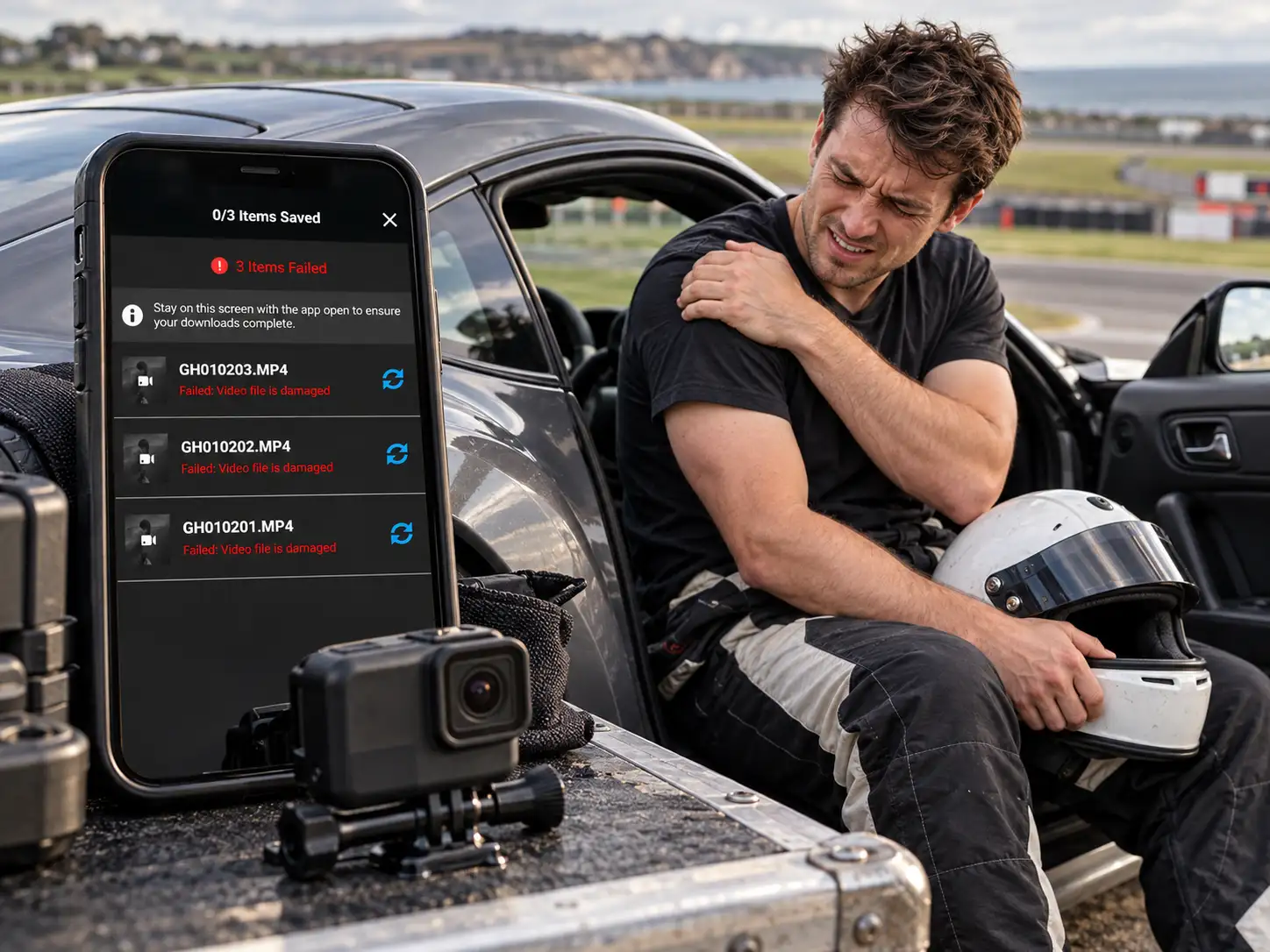
After a few laps I started recording, and this is where it went wrong. The SD card was one I'd used countless times before, and I'd even tested it with a 10 second clip before setting off. It worked, so I thought it was fine. I went out for a few hot laps, did various recordings and was happy.
Then I realised I'd messed up. The GoPro hadn't been saving properly, and all I had to show for it was a set of empty MP4s.
This proves a good point: check that your equipment works, not just that you have it.
2. Don't rush. Just don't!
The second most important point is DO NOT RUSH! I learnt this the hard way, and plenty of others come to the same fate.
For me it wasn't rushing on track. It was rushing the basic things that didn't need rushing at all. In my case, putting my helmet on.
We'd just done our safety briefing and I was full of excitement when the call came for the sighting laps. I ran back, jumped into the car and tried to get my helmet on in a hurry, without quite enough room. I overstretched and badly pulled my shoulder.
For the rest of the day I was in agony turning the car right, and even turning my head. I had to cut my full day short and miss the evening session because I just couldn't turn the wheel without pain. It's better to be a bit late than to injure yourself and make the day more difficult than it needed to be.
The same goes for your driving. Many people see other drivers flying round, feel they're missing out and start to overdrive the car beyond their ability, either to catch up or to prove themselves. This never ends well. It can lead to missing the apex, going off into the gravel, or worse, causing a crash.
3. Book the right accommodation, for the right number of nights
This is another one I've experienced myself. For Anglesey I booked a nearby Premier Inn for the Friday night, within 20 minutes of the circuit, with the track day running from 7am to 5pm on the Saturday. It seemed perfect. What I failed to account for was how many nights I'd actually need.
The day before travelling, my wife and I realised one night wouldn't be enough. We had equipment and clothing in bags and boxes that needed somewhere to stay, but we'd have to check out before 12pm while we were at the track. We didn't want to bring it all to the track either, because having stuff flying around when you're taking a corner is very distracting and annoying.
We also realised that driving 200 miles home straight after a full day on track wasn't good for me as the driver, or for the car. It's not just humans that need rest.
So we extended our stay. Our original night only cost £63, so we thought one more wouldn't be too bad. How wrong we were. Adding the extra night that close to the time cost us £107 on top. If we'd booked it at the start, that's probably what both nights would have cost together.
So make sure you book that extra night at the time of booking! It will save you financially, and save your sanity.
4. Learn the track before you get there
The sighting laps are slow and over quickly, and after that you're out on your own. If you've never seen the circuit before, you spend your first sessions working out where it goes instead of enjoying it, and that's when people brake in the wrong place or turn in too early.
Learn the layout before you go: the corner names, which way each one goes, where you brake and where the track rises and falls. Anglesey has more than one layout, so check which one your track day is using.
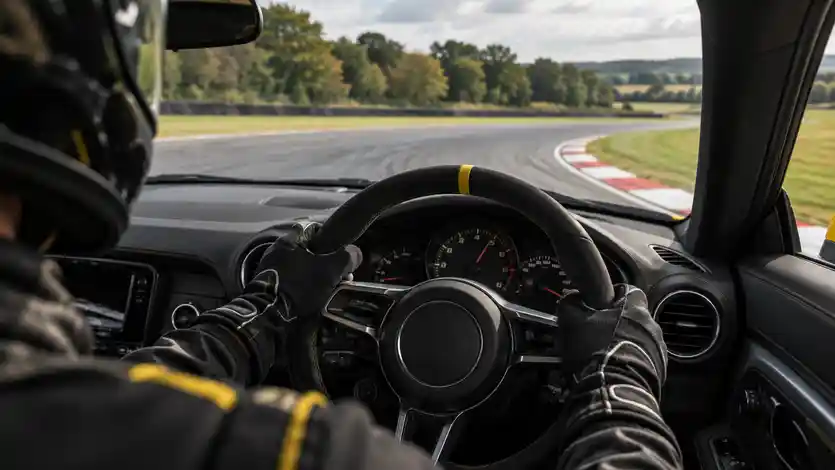
Personally, I'm lucky enough to have a racing simulator at home, with a Fanatec CSL DD (8Nm) wheel base and various steering wheels to match whatever class and type of car I'm driving. With the added bonus of a Oculus Rift CV1 VR Headset, it feels like being there without leaving the house. This let me drive the track in my own car and get a real feel for what it would be like on the day. But I know a lot of people aren't so lucky, or just don't have the space for a specialised simulator like this.
This is the reason I built APEXGUIDE. You can drive a full lap of Trac Môn Anglesey Circuit and many other tracks from the view of the driver before you go, so the first time you see a corner isn't at speed.
5. Don't forget the basics on your car
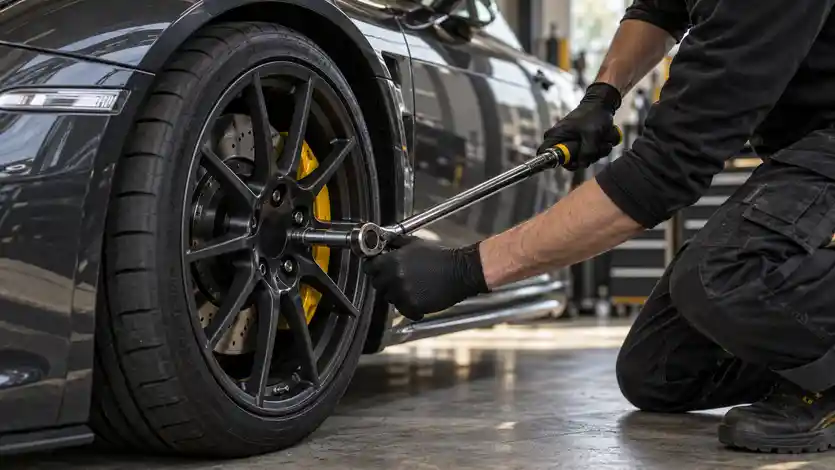
It's easy to focus on yourself and forget your car is working a lot harder than it ever does on the road. Before you go and during the day:
- check your tyre pressures before going out and after each session, as they rise when the tyres get hot
- check your oil level and bring a spare litre
- don't go into the last session of the day on an empty tank
- take every loose item out of the car (the same reason we didn't want our bags at the track)
- check the noise limit with your organiser, as a loud exhaust can keep you off track
Just like our bodies, your car needs the right fluids to work properly. I was glad I checked my coolant before setting off to the track, and before driving anywhere that day (never check your coolant once the engine is hot, or even after a short drive). It had dropped to the minimum level. That would probably have been okay for normal driving, but when you're pushing the car to the limit it needs proper cooling so your engine doesn't self destruct.
When topping up coolant, always check what type is already in there. The colour can give you a clue, or check your car's handbook, and if you're not sure, pop to your local mechanic for help. It's vital you don't mix different coolant types, as this can lead to sludge building up in your cooling system, meaning it can no longer cool as well as it should. You can learn more about coolant / antifreeze here.
Thank concludes my 5 personal track day mistakes to avoid - I hope some of these points were useful and maybe some of them you have experienced yourself.
Frequently Asked Questions
What SD card should I use in my GoPro for a track day?
A brand-name card rated V30 or U3 is the safe choice for recent GoPros, though older models work with Class 10 or UHS-I cards. Check your camera's manual for the exact rating and the biggest card it supports. Whatever you use, format it in the GoPro before the day, then record a few minutes and play it back. A 10 second test clip wasn't enough to catch my faulty card.
How far in advance should I book a hotel for a track day?
Book it as soon as your track day is confirmed, and book every night you'll need at the same time. Prices go up as rooms fill, which is how one extra night cost us £107 on top of our original £63. Some chains, Premier Inn included, offer a cheaper non-refundable rate and a pricier flexible one, so think about whether your track day could be cancelled before picking the cheap rate.
When should I check my coolant before a track day?
Check it with the engine cold, ideally before you drive anywhere that morning. The cooling system is under pressure when it's hot, so opening the cap can spray scalding coolant. The level should sit between the min and max marks on the expansion tank, and you should top up with the type your handbook specifies rather than mixing types.
Do I need my own helmet for a car track day?
Not always. Many circuits hire helmets on the day. OpenTrack.co.uk, for example, charges £20 but has limited stock and asks you to leave ID. Any helmet you use has to meet current standards such as Motorsport UK or FIA, so if you're bringing your own, check its rating with your organiser first.
How can I learn a track before my first track day?
Watch onboard videos from the circuit, and if you have a sim rig, drive it there first. If you don't, APEXGUIDE lets you drive a full lap of the circuit from the cockpit in your browser, so you know where the track goes before your sighting laps.