Track driving places greater demands on a car than an ordinary road journey. Preparation starts with understanding its condition and addressing problems early.
Carry out checks with enough time to arrange repairs. If you are unsure about a component or your car’s suitability, have it inspected by a workshop familiar with circuit use.
Check Tyres and Wheels
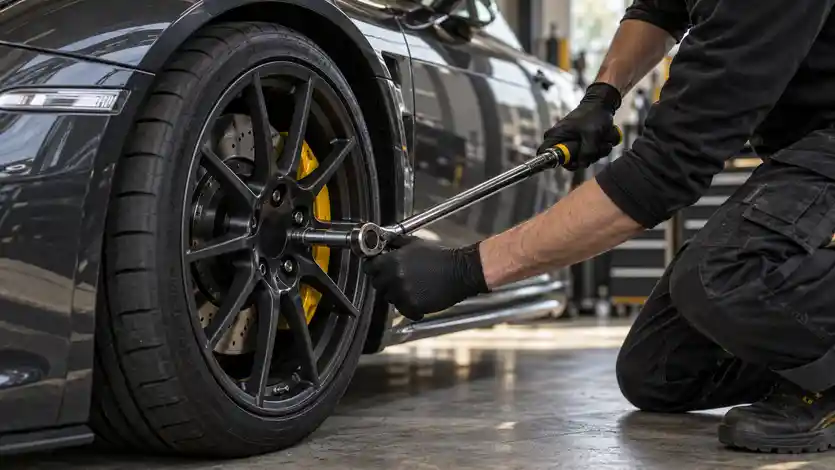
Inspect tyres for cuts, bulges, cracking, uneven wear and sufficient tread for the expected conditions. Check the wheels for damage and tighten wheel fasteners to the vehicle or wheel manufacturer’s specified torque.
There is no universal track-day tyre pressure. Use guidance appropriate to your car and tyres, and monitor pressures as they warm up. Avoid copying another driver’s settings.
Before returning to the road, restore the correct road pressures using the manufacturer’s checking procedure. Michelin’s official performance-driving guidance explains the distinction between cold and hot pressures.
Give the Brakes Attention
Check pad material, disc condition and brake-fluid service history. Investigate leaks, unusual pedal travel or inconsistent braking before attending.
Make sure the components and fluid are suitable for your car and intended use. If parts need replacing, allow time for proper installation and bedding-in according to their manufacturer’s instructions.
Do not treat topping up low brake fluid as a complete repair: the cause needs checking. An organiser’s checklist, such as Javelin’s official pre-event checks, is a useful starting point.
Check Fluids and General Condition
Check oil and coolant using the vehicle manufacturer’s procedure, keeping levels within the specified range. Look for leaks, damaged hoses and unresolved warning lights.
Inspect seat belts and seat mountings, and make sure the battery is properly secured. Check any manufacturer guidance for track use, including servicing or cooling requirements.
Never open a hot, pressurised cooling system.
Confirm the Noise Requirements
Check the limits for your exact event. A circuit may use static testing, drive-by monitoring or both, and the permitted level can vary between dates.
Passing one test does not guarantee passing every other test. If you are unsure, ask the organiser about a noise check before booking or travelling.
Pack a Practical Car Kit
Useful equipment includes:
- An accurate tyre-pressure gauge and inflator
- A torque wrench and the correct wheel socket
- The correct towing eye, fitted when required
- Compatible top-up fluids
- Gloves, cloths and a small basic tool kit
- A secure container for loose belongings
Remove loose objects from the cabin and boot before driving. Secure permitted cameras and accessories according to the organiser’s rules.
Personal essentials, documents and clothing are covered in Your First Track Day: Getting Started.
Monitor the Car Throughout the Day
Begin with manageable outings and inspect the car between them. Watch for fluid loss, unusual tyre wear, warning lights or changes in braking and handling.
If something changes unexpectedly, end the outing safely and get it checked. Do not keep circulating to see whether a developing fault disappears.
Check Again Before Driving Home
Allow the car to cool, then check tyres, pressures, fluid levels and any signs of damage or leakage. Follow the manufacturer’s procedure for checking wheel fasteners.
Make sure everything removed for the event is safely stowed. If the car has developed a fault that affects roadworthiness, arrange recovery instead of attempting the journey home.
With the car ready, use APEXGUIDE to prepare for the circuit—and read Driving Technique: Lines, Braking and Building Confidence to plan your first sessions.