Knowing how a track day works helps you feel more comfortable behind the wheel. Everyone shares the same circuit, and clear communication matters just as much as knowing the next corner.
Your event briefing sets the rules for the day. Listen carefully, even if you have driven the circuit before, and ask the organiser about anything you do not understand.
Make the Most of Sighting Laps
Sighting laps introduce the circuit at a controlled pace, usually behind a lead vehicle. Follow the instructed spacing and do not overtake.
Look for marshal posts, signal lights, pit entry and pit exit, as well as the layout itself. Notice the conditions: standing water, low sunlight or a damp section can change what you see and how the circuit feels. MSVT’s official beginner guidance explains its familiarisation procedure.
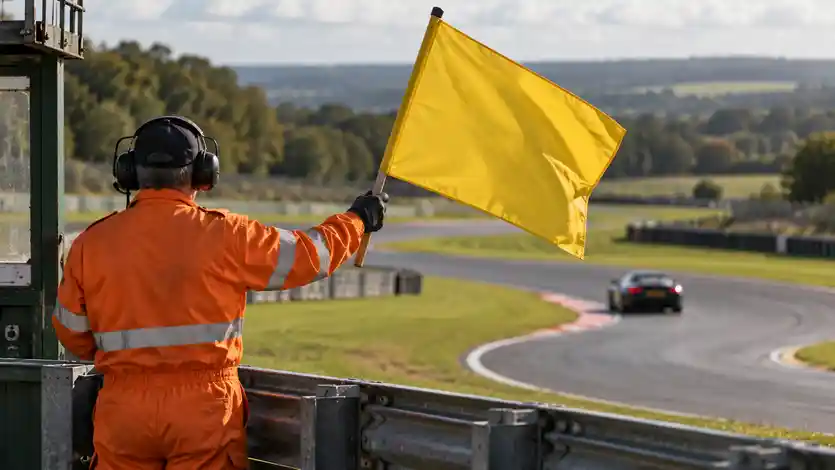
Understand the Flags and Lights
Learn the signals explained in your briefing. Common track-day signals include:
Signal | What to do |
|---|---|
Yellow | Slow down, stop overtaking and be prepared for a hazard ahead. |
Red | The session has stopped. Reduce speed safely, do not overtake and return to the pits as directed. |
Blue | A faster car is waiting behind. Facilitate a pass according to the event’s rules. |
Yellow and red stripes | Expect reduced grip or debris on the surface. |
Black | Return to the pits and report to a marshal. |
Black and white diagonal | A warning about driving standards or track limits. |
Chequered | The session has ended. Reduce pace and return to the pits without overtaking. |
Green | Its use depends on context; it may identify active marshal posts during sighting laps. |
These meanings reflect common practice; follow the specific instructions given by your organiser. MSVT’s official on-track guidance explains its signals and procedures.
Make Overtaking Predictable
Many UK track days allow passing only on designated straights, on a specified side and with consent. Confirm the rules before heading out.
If you are catching another car, leave space and wait for a clear invitation. If someone catches you, acknowledge them using the agreed signal and allow the pass smoothly. Avoid sudden braking or abrupt changes of direction.
Being overtaken is a normal part of a track day. You do not need to defend your position.
Treat the Pit Lane as a Working Area
Follow the posted speed limit, traffic direction and marshal instructions. Watch for people and vehicles moving around garages.
Know the joining procedure before leaving the pits, and check for approaching traffic before merging. When returning, signal as instructed and position yourself for pit entry early enough to avoid surprising the car behind.
Build Familiarity Before Arriving
Use APEXGUIDE to learn the corner sequence before the event. Knowing the layout leaves you more attention for flags, traffic and instructions once you are there.
For help with the driving itself, continue with Driving Technique: Lines, Braking and Building Confidence.