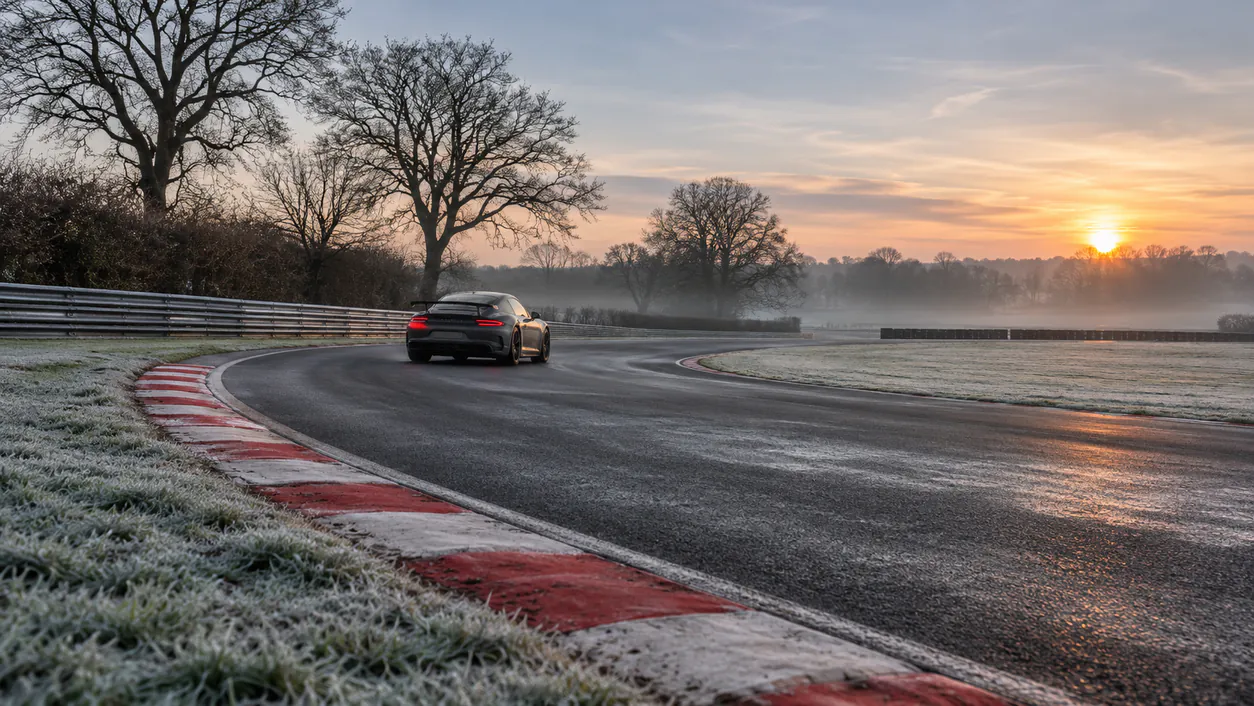
Winter track days can be cheaper than summer dates, and the paddock is usually quieter. A cold, greasy circuit also teaches car control, because it shows you where the grip runs out at lower speeds.
The catch is that almost everything takes longer. Tyres, brakes and engine oil all need more time to reach working temperature, and the track itself can stay cold and damp all day. A bit of planning makes the difference between a good day and a frustrating one spent sliding about or sitting in the paddock. Here is what to check before you go.
Summer track day | Winter track day | |
|---|---|---|
Warm-up | One gentle lap is often enough | Two or more laps before you push |
Tyre pressures | Bleed down as they heat up | Let out less, as they build less heat |
Braking points | Your usual markers | Earlier, then work forward |
Track surface | Usually dry and grippy | Cold, often damp in shaded areas |
Daylight | Long days | Sunset before 4pm near the shortest day |
Get the car ready for the cold
The usual track day checks still apply: fresh brake fluid, pads with plenty of life left, oil at the right level and wheel nuts torqued correctly. Cold weather adds a few more things to look at in the week before.
- Battery. A weak battery is more likely to fail on a cold morning, and a car sitting in the paddock with the fan and lights running drains it further. If it has been slow to start, get it tested or bring a jump pack.
- Coolant. Check the antifreeze mix is right for freezing nights, especially if the car lives outside.
- Screenwash. Use a winter screenwash that is rated for low temperatures. Plain water can freeze in the lines on the drive there.
- Wipers and demisting. Low winter sun on a dirty screen is hard to see through. Clean the inside of the glass, fit decent wipers and remember the air conditioning clears misting faster than the heater alone.
- Tyres. More on these below, but check the tread depth and look for cracks or damage before you go.
Tyres, temperatures and pressures
Tyres are where winter changes things most. A cold track pulls heat out of the rubber, so the tyres warm up more slowly and may never get as hot as they would in summer.
Know what your tyres are made for. Summer and track focused tyres use compounds that harden as the temperature drops, and grip falls away noticeably below about 7°C. Some semi-slick tyres also have manufacturer guidance about use and storage near freezing, so check yours before the day. If the forecast is close to zero, a good summer tyre can be a better choice than a semi-slick that never reaches its working range.
Don't drop your pressures as much. On a summer day, many drivers let air out as the tyres heat up and the pressures climb. In winter the tyres build less heat, so the pressures rise less too. If you bleed them down by your usual summer amount, you can end up well below where you want to be once the tyres cool between laps. Start from your normal cold pressures, then check them hot as soon as you come in and only take out what you need.
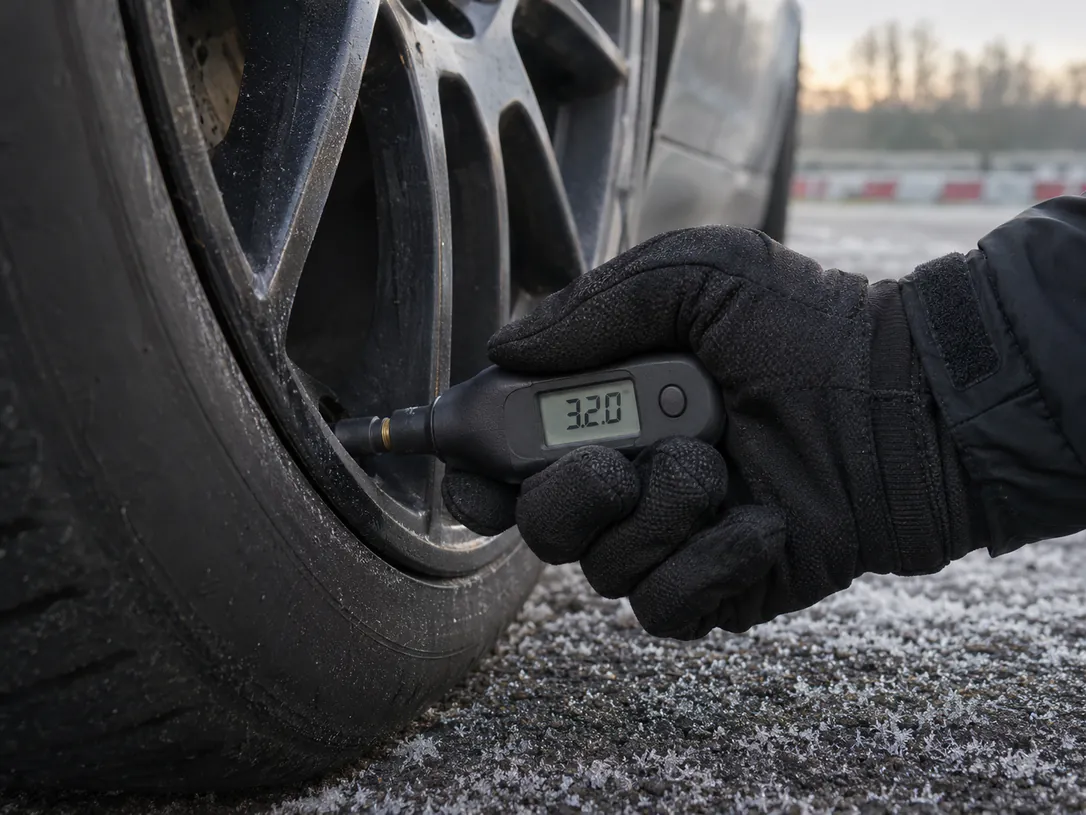
Check pressures at the circuit, not at home. Air pressure drops as the temperature falls, by roughly 1 psi for every 5 to 6°C. Tyres set to 32 psi in a garage at 18°C can read 2 to 3 psi lower after a night in a paddock at 3°C. Bring your own gauge so you are comparing like with like all day.
Air temperature | Approximate reading (set to 32 psi at 18°C) |
|---|---|
18°C | 32 psi |
10°C | 30.7 psi |
3°C | 29.6 psi |
0°C | 29.1 psi |
Worked out with the gas law for a sealed tyre, so treat the numbers as a guide.
Keep notes. Write down cold and hot pressures for each session, with the air temperature. It takes a minute and gives you a baseline for the next cold day.
Allow extra time to warm up
In summer one gentle lap is often enough. In winter, plan on two or more before you start pushing.
- Engine oil. The temperature gauge on most cars shows coolant, and oil takes longer to get warm. Keep the revs moderate until the oil is up to temperature, or give it a few extra minutes if the car has no oil gauge.
- Tyres. Build heat with firm, progressive braking and acceleration in a straight line. Weaving from side to side does very little to warm a tyre. Expect the first flying lap to have less grip than the same lap later in the session.
- Brakes. Cold pads and discs bite less, and some track pads feel wooden until they are warm. Brake earlier than usual on the first laps and feel the pedal improve.
- After a red flag or long pause. Everything cools quickly in winter air. Treat the first lap back out like an out lap again.
The track can warm up during the day as well. A corner that felt slippery in the first session can feel very different after lunch, and colder again as the sun drops. Keep reading the surface rather than assuming it is the same as last time round.
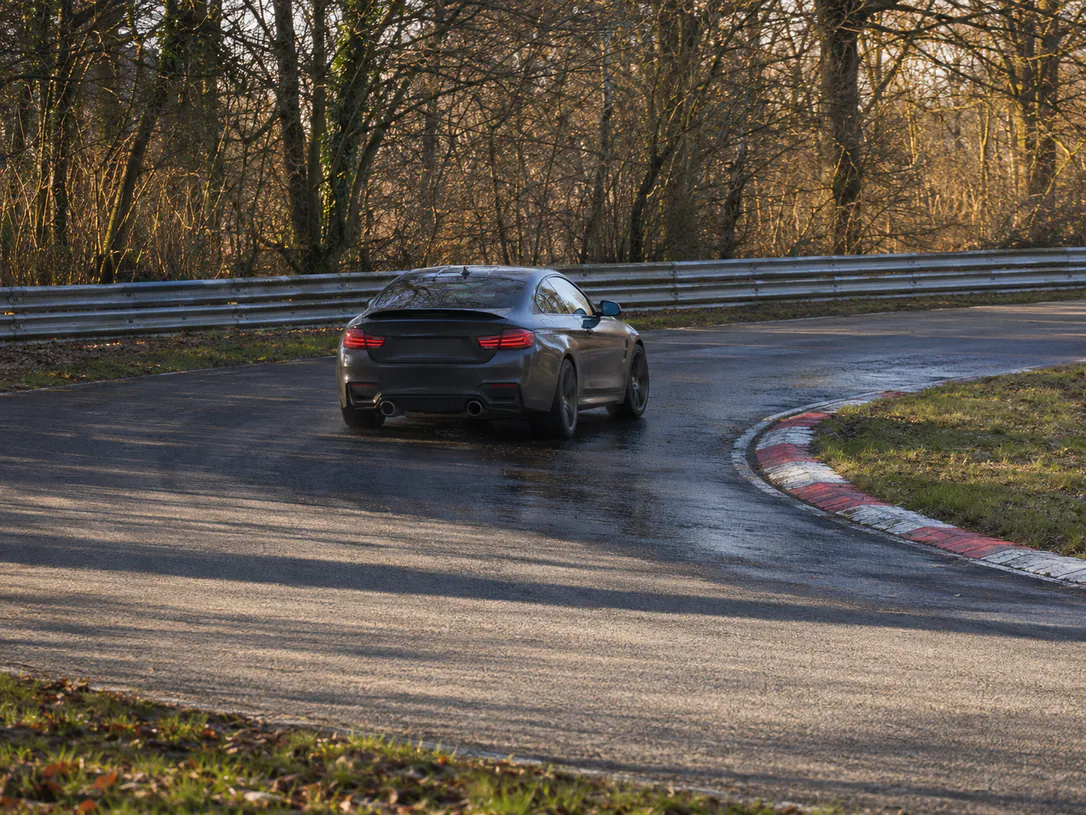
Driving on a cold or damp track
A cold track rarely looks slippery, which is what catches people out. Drive the first laps as a reading exercise and build up from there.
- Brake earlier and more smoothly. Grip is lower everywhere, so your summer braking points will be too late. Move them back and come forward a little at a time.
- Be gentle with the throttle out of slow corners. Cold rear tyres let go with less warning, especially in powerful rear-wheel-drive cars.
- Watch for damp under trees. Shaded sections can stay wet long after the rest of the lap has dried. Tree-lined circuits such as Cadwell Park and Oulton Park are good examples, and the same goes for parts of the Brands Hatch GP loop.
- Avoid painted kerbs and white lines when wet. Paint offers very little grip in the damp, so keep your wheels off it.
- Think about the wet line. When the track is properly wet, the usual dry line can be the slipperiest part of the circuit because of rubber and oil laid down on it. Many drivers move slightly off it in braking zones and corners.
- Plan for low sun. In December the sun stays low all day and can sit right in your eyeline on some straights. A clean visor and screen help a lot, and sunglasses are worth packing for the paddock and the drive home.
- Look for the slippery surface flag. A yellow flag with red stripes warns of oil, water or debris ahead. Mud dragged on by cars that have gone off is more common in winter.
Clothing and what to bring
Most of a track day is spent standing in the paddock, and a UK circuit in December can be very cold and windy. Check your organiser's dress rules first. Most ask for long sleeves, full-length trousers and closed shoes on track, and natural fibres such as cotton are generally advised over synthetics.
What to wear
- Thin layers you can add or take off between sessions
- A warm, waterproof coat and a hat for the paddock
- Thin driving gloves, plus warmer gloves for checking pressures
- Driving shoes with thin soles, and a second pair of shoes and socks in case your feet get wet
What to pack
- Tyre pressure gauge and a pump or small compressor
- Torque wrench and the right socket for your wheel nuts
- Spare engine oil, plus some brake fluid and coolant
- De-icer and an ice scraper
- Microfibre cloths and anti-fog spray for the screen and visor
- Jump pack or jump leads
- Tow eye, fitted or in the car
- Hot drinks in a flask, food and water
- A head torch, as it gets dark early
- Phone charger or power bank, since batteries drain faster in the cold
Around the shortest day the sun sets before 4pm in much of the UK. Many winter track days finish earlier because of it, so check the timetable and leave time to pack up in daylight. Keep an eye on the organiser's social media on the morning too, as frost or ice can delay the first session.
Learn the circuit before you go
On a cold day you will be using a lot of your attention on grip, so the less you have to think about where the track goes, the better. Knowing the layout before you arrive means your first laps can go on reading the surface instead of finding the next corner.
The ApexGuide simulator lets you drive a lap of UK circuits such as Donington Park, Oulton Park, Cadwell Park, Brands Hatch and Anglesey in your browser or on the app. It shows the racing line and braking markers, so you can learn where each corner is and where to slow down. Treat those markers as a guide for dry conditions and give yourself extra margin on the day.
If you have not booked yet, the track day finder lists upcoming dates by circuit and price.
Frequently Asked Questions
What tyre pressures should I run on a winter track day?
Start from your normal cold pressures, checked at the circuit once the car has cooled to the air temperature. The tyres build less heat in winter, so let out less air than you would in summer and check them hot after every session.
Are summer tyres OK on a cold track day?
Usually, yes, with care. Summer and track tyres lose a lot of grip below about 7°C, so expect less grip than usual. If it is near freezing, check your tyre maker's guidance first, especially for semi-slicks.
How long should I warm up on a cold track?
Plan on at least two steady laps before you push, and longer if the car has no oil temperature gauge. Do the same again after a red flag, because tyres and brakes cool quickly in winter air.
What should I wear to a winter track day?
Follow your organiser's dress rules, which usually mean long sleeves, full-length trousers and closed shoes on track. Wear thin layers you can change between sessions, and bring a warm coat, a hat and a spare pair of shoes and socks.
Do track days get cancelled for frost or snow?
Some do. Frost and ice often delay the first session, and heavy snow or ice can cancel a day. Check the organiser's social media on the morning, and read their refund or transfer policy when you book.