Learn Anglesey Circuit, also known as Trac Môn, before your track day with this guide to its International GP and Coastal layouts. Follow a cockpit reference lap in your browser, then explore the corners below to understand the braking zones, changing gradients and turns that deserve another look. Drive the International GP lap on your phone or laptop, with no sim rig or game to install.
About Anglesey Circuit
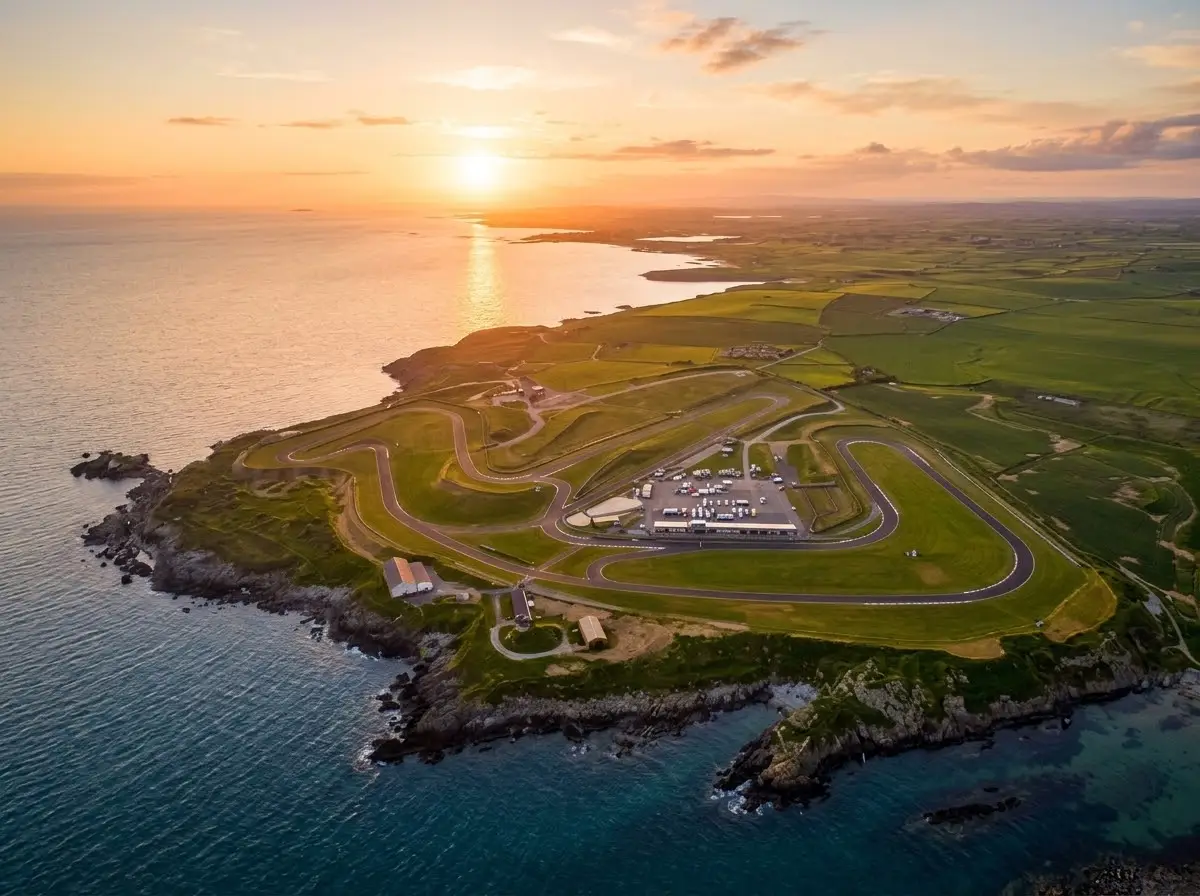
Anglesey Circuit sits near Ty Croes on the west coast of Anglesey, North Wales. The sea is part of the backdrop, but it is the shape of the track that gives you something to learn: long sweeping bends, banked tarmac, heavy braking areas and crests that change what you can see ahead.
The circuit rewards familiarity. Knowing that a slow corner follows a fast approach, or that the track drops away beyond a crest, gives you more time to prepare instead of reacting at the last moment.
There are four main layouts:
- International GP: 3.380 km (2.10 miles).
- Coastal: 2.494 km (1.55 miles).
- National: 1.931 km (1.20 miles).
- Club: 1.287 km (0.80 miles).
This guide focuses on International GP and Coastal, both clockwise layouts available to explore with ApexGuide.
International GP and Coastal: choosing the right layout
The International GP and Coastal layouts share much of their opening section, including The Banking, Church, Rocket and Peel. Their closing sections give them quite different characters.
On International GP, the lap continues through Seamans onto the Tom Pryce Straight. A substantial braking zone leads into The Hairpin, followed by the return towards the final left-hand corner.
The Coastal layout takes the shorter downhill route through the Corkscrew, leaving out the International layout’s long extension and Hairpin. There is less time between direction changes, so learning how the closing sequence fits together matters more than memorising individual corners.
Check your organiser’s booking page and joining instructions before choosing which lap to study. Some events use different layouts across a day or weekend. If the paperwork only says “Anglesey”, ask the organiser rather than assuming.
When looking at an Anglesey Circuit layout map, the long extension to The Hairpin identifies International GP. The shorter return through the Corkscrew identifies Coastal.
How to learn Anglesey before you go
You can learn the corner order and recognise the approaches without visiting the circuit or owning a racing simulator. ApexGuide runs in a phone or laptop browser and lets you follow a reference lap with the racing line, braking zones and corner information visible.
Start with Drive the International GP lap, or explore the Coastal layout if that matches your booking.
A useful routine is:
- Watch one complete lap. Concentrate on where the circuit goes. Ignore the speed figures initially.
- Learn the corner sequence. Try saying the next corner’s name before it appears.
- Revisit the big changes in speed. Notice how different the approaches to Church, Rocket and The Banking look.
- Connect the corners. Watch how leaving one turn affects the approach to the next.
- Return the evening before your event. One familiar lap can help refresh the sequence without overloading you with detail.
Your aim is to arrive recognising the track. Browser practice cannot reproduce the grip, physical forces or visibility you will experience in your own vehicle.
For riders, the layout and corner sequence remain useful, but the car-based reference speeds and lines should not be treated as motorcycle targets.
International GP corner by corner
ApexGuide highlights nine key corners on the International GP reference lap. These are the main learning points in the viewer, rather than a count of every bend on the circuit.
The simulated reference lap is 1:52.6, reaching approximately 110 mph. Every braking distance below is measured before the apex, not before the corner entrance or from a roadside braking board.
Use the figures to understand the relative demands of each corner. Your braking points depend on your vehicle, tyres, conditions and experience.
Turn 1
The opening left arrives soon after the start line, making it worth identifying before you begin your first flying lap. On the reference lap, braking starts about 100 metres before the apex, with speed reducing from 76 mph to 59 mph. Avoid letting the excitement of crossing the line distract you from the approach and exit.
The Banking
This banked right turns through almost 180 degrees and needs a much greater reduction in speed than Turn 1. The reference lap brakes about 125 metres before the apex, slowing from 83 mph to 37 mph. Watch how the line allows the car to finish turning before accelerating away; turning in too soon can leave you short of room later in the corner.
Church
Church is a long, fast right with a very different rhythm from The Banking. The reference lap reduces speed from 84 mph to 70 mph, braking about 60 metres before the apex. Focus on the shape of the bend and how its exit feeds the following section, rather than trying to match the displayed speed.
Rocket
Rocket brings the largest speed reduction among these reference points, from 109 mph to 31 mph. Braking begins about 190 metres before the apex of the left-hander. Recognise the approach early and give yourself ample braking margin on your first laps; arriving too quickly also compromises the right-hand turn that follows.
Rocket horseshoe
The right-hand part of the Rocket complex follows quickly, so treat the two turns as a connected sequence. The reference lap slows from 41 mph to 34 mph, with braking starting about 30 metres before the apex. Trying to accelerate hard out of the first turn before preparing for the second can make the whole section feel rushed.
Peel
Peel is a right-hander over the high part of the circuit, where the crest changes your view and can make the car feel light. The reference lap brakes about 65 metres before the apex, reducing speed from 69 mph to 46 mph. Keep your inputs smooth and avoid adding speed simply because you cannot yet see the full exit.
Seamans
On International GP, this downhill left leads towards the Tom Pryce Straight. The reference lap slows from 76 mph to 45 mph, beginning its braking about 90 metres before the apex. Pay attention to the falling gradient and the exit line rather than looking ahead to the straight too early.
The Hairpin
After the Tom Pryce Straight, The Hairpin turns sharply right and calls for another substantial reduction in speed. The reference lap brakes about 120 metres before the apex, slowing from 93 mph to 30 mph. A patient entry helps you complete the turn without running out of space on exit.
Final left
The final left can look inviting on approach, but the corner tightens as it develops. The reference lap reduces speed from 97 mph to 41 mph, with braking beginning about 145 metres before the apex. Avoid treating the visible entry as the whole corner; leave yourself enough margin for the tighter section beyond it.
Coastal corner by corner
The opening corners described above help you understand Coastal too, but its shorter closing section needs separate attention. Do not carry the International lap’s expectations into the downhill return towards the start straight.
Peel and the approach to the Corkscrew
Peel becomes your cue to prepare for the Coastal layout’s closing sequence. Look beyond the immediate corner and follow how the track positions you for the descent. Study this section on the Coastal lap itself, because the International route through Seamans and onto the long straight creates a different rhythm.
The Corkscrew
The Corkscrew combines a downhill section with successive changes of direction. It is best learned as one connected sequence: where you finish the first part affects the room available for the next.
Watch the complete section before concentrating on individual apexes. On your first real laps, leave enough time to recognise each change rather than rushing towards the first visible exit.
Returning to the start straight
The final part of the Coastal lap follows directly from the Corkscrew sequence. Focus on finishing the remaining direction changes before building speed onto the straight.
The International braking figures above do not apply to this section. Coastal-specific reference figures can be added separately without implying that the two layouts share identical approaches.
First track day at Anglesey: tips
Prepare for changing weather. The exposed coastal setting means wind and rain deserve attention even when the morning starts well. Reassess your pace when conditions change instead of relying on the grip you had in an earlier session.
Give yourself time on arrival. Follow your organiser’s timetable for signing on, equipment checks, noise testing and the briefing. An unhurried start makes it easier to absorb instructions.
Check the requirements for your particular event. Read the organiser’s joining information and the circuit’s official guidance for noise restrictions and venue arrangements. Review the layout, then use the briefing to understand run-off areas, track limits and any restrictions in force.
Use the first session to get your bearings. Identify marshal posts, pit entry and the corners that looked unfamiliar in the viewer. Build pace gradually as your confidence and understanding improve.
Take instruction if it is available. Explain which corners you are unsure about. An instructor can relate what you have studied to your vehicle and the conditions that day.
Frequently asked questions
Can I learn Anglesey Circuit without a simulator or video game?
Yes. ApexGuide lets you follow an Anglesey reference lap in your phone or laptop browser, with no racing game, steering wheel or sim rig required. You can learn the corner sequence, recognise approaches and review braking zones before visiting. This builds familiarity, while real driving technique and pace still need to develop on the day.
Is the ApexGuide simulator free?
Yes. ApexGuide’s Anglesey browser lap viewer is free to use, with a free account required to continue exploring certain features and tracks. You do not need to buy a racing game or install specialist software. The viewer helps you study the layout and reference lap before your track day.
Which Anglesey layout is my track day on?
Check your organiser’s booking page, confirmation email and joining instructions for the layout name. International GP and Coastal share several corners but have different closing sections, so it is worth learning the correct version. Some events change layouts during the day or weekend. Ask the organiser if your paperwork only says “Anglesey”.
What is the difference between the International GP and Coastal layouts?
Anglesey International GP is 3.380 km (2.10 miles) long and includes the Tom Pryce Straight and The Hairpin. Coastal is shorter at 2.494 km (1.55 miles), using the downhill Corkscrew route instead of that extension. Both run clockwise and share much of their opening section, including The Banking, Church and Rocket.
How long is Anglesey Circuit?
Anglesey Circuit has four main layouts. International GP measures 3.380 km (2.10 miles), Coastal is 2.494 km (1.55 miles), National is 1.931 km (1.20 miles), and Club is 1.287 km (0.80 miles). Check the layout named on your booking, because “Anglesey Circuit” alone does not tell you which distance your event uses.
Where do I brake for Rocket?
On ApexGuide’s simulated International GP reference lap, braking starts approximately 190 metres before Rocket’s apex, reducing speed from around 109 mph to 31 mph. That is a reference measurement, not a universal braking point. Your vehicle, tyres, conditions and experience determine where you should brake. Begin conservatively and work with an instructor.
Is Anglesey a good circuit for a first track day?
Anglesey can be a rewarding first track day when you choose an event suited to your experience and build up gradually. Its mix of fast bends, tighter corners and changing gradients gives you plenty to learn. Familiarise yourself with the correct layout beforehand, follow the briefing and use instruction where available.
What is the hardest corner at Anglesey?
There is no single hardest corner for everyone. Rocket demands a large reduction in speed, Church requires judgement through a fast bend, and Peel adds a crest to the challenge. On Coastal, the Corkscrew combines a descent with successive direction changes. Spend extra time studying whichever section you find hardest to anticipate.