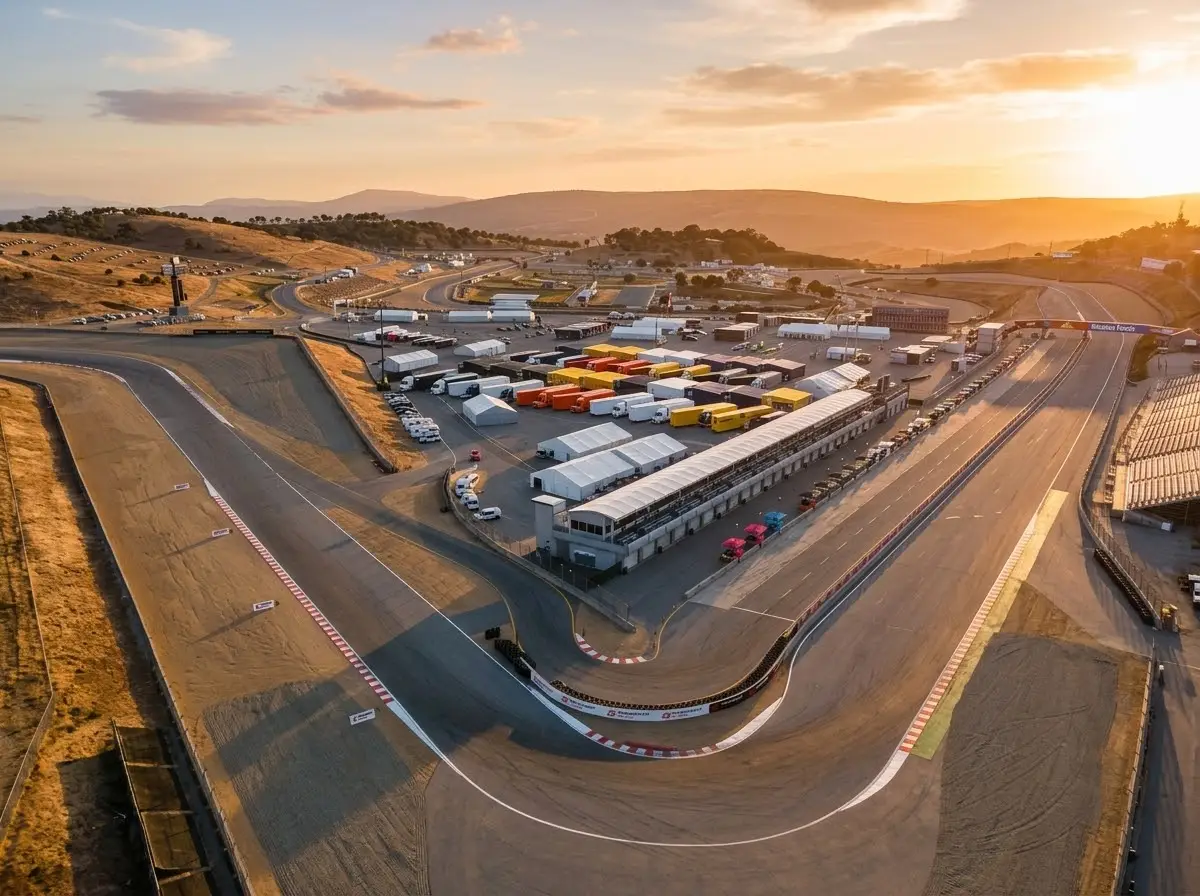
Learn Laguna Seca before your track day with this guide to the circuit layout, corner sequence and changes in elevation. Follow a cockpit reference lap in your browser, then revisit the Andretti Hairpin, Corkscrew and Rainey Curve at your own pace. Drive the Laguna Seca lap on your phone, tablet or desktop, with no racing game or sim rig to install.
About Laguna Seca
WeatherTech Raceway Laguna Seca is near Monterey, California. The circuit measures approximately 3.602 km (2.238 miles), with 11 turns, and combines slow corners, flowing sections and a climb to one of motorsport’s best-known changes in elevation.
The Corkscrew attracts much of the attention, but learning the whole lap matters. The opening hairpin, the approach to Turn 6 and the final left each require a different judgement. Recognising their sequence helps you prepare without letting one famous corner dominate your attention.
A circuit map shows how these sections connect, while the cockpit view helps explain what the crests and gradients hide. Use both perspectives before you arrive, then compare them with your view from the actual driving position.
Understanding the Laguna Seca layout
The lap crosses the rise at Turn 1 before descending towards the Andretti Hairpin at Turn 2. Two rights at Turns 3 and 4 follow, before the left-hand Turns 5 and 6 take you towards the uphill run to the Corkscrew.
The Corkscrew combines Turns 8 and 8A into a left-right sequence over a sharp drop. Rainey Curve follows downhill, then Turn 10 leads towards the tight final left at Turn 11 and the return to the main straight.
Break the lap into three parts: the opening and infield, the climb to the Corkscrew, and the descent back to the final corner. Learn where one section becomes the next before concentrating on individual apexes.
For the venue’s current map and background, see the official Laguna Seca track information. Check your organiser’s joining instructions for event access, pit arrangements and any restrictions that apply to your booking.
How to learn Laguna Seca before you go
You can begin learning Laguna Seca without visiting the circuit or owning a racing simulator. ApexGuide’s browser viewer provides a cockpit reference lap and corner information so you can review the route in short sessions.
Open Drive the Laguna Seca lap and work through this routine:
- Watch the complete lap. Notice the low section, the climb and the downhill return before focusing on speed.
- Learn the sequence. Identify the Andretti Hairpin, Turn 6, the Corkscrew and Turn 11, then fill in the connections.
- Revisit the hidden sections. Study what becomes visible over the approach to the Corkscrew and how the track continues beyond it.
- Follow complete combinations. Watch both parts of the Corkscrew and the approach to Rainey Curve together.
- Refresh your memory before travelling. Spend time on unfamiliar approaches instead of trying to memorise every number on screen.
The reference lap comes from a racing simulator. Its speeds and braking information are examples rather than targets for your own vehicle. Your tyres, experience and the day’s conditions determine your real braking points.
Simulator scenery and surfaces may also differ from the current venue. Use the lap to recognise the route, then follow the briefing, marshal instructions and sighting laps. Riders should use motorcycle-specific instruction rather than treating a car reference line as a riding guide.
Laguna Seca corner by corner
The sections below follow the lap in order. Some guide entries combine multiple turns, particularly the Corkscrew, so the number of named sections is not the same as the circuit’s official turn count.
Turn 1 and the approach to Turn 2
The rise at Turn 1 makes the approach to the Andretti Hairpin worth studying before you drive it. Look beyond the crest in the viewer and follow how the road leads into the next braking area. Recognise the sequence early rather than waiting until the whole hairpin is visible to begin preparing.
Andretti Hairpin, Turn 2
The Andretti Hairpin is a long left that requires you to think beyond the first visible apex. Watch the entire turn and how its exit positions the car for the next part of the lap. A controlled approach gives you room to complete the corner without needing to tighten the steering unexpectedly near the exit.
Turn 3
Turn 3 is the first right after the hairpin. Reset your attention for its different shape instead of carrying the rhythm of the long left into it. Watch the approach and exit together, leaving a comfortable margin while you learn how this corner connects with Turn 4.
Turn 4
A second right follows, but it should not be treated as a repeat of Turn 3. Compare the shapes in the viewer and notice how the exit opens towards the next section. Avoid assuming that similar direction means the same entry speed, steering input or amount of space on the way out.
Turn 5
Turn 5 takes you left towards the climbing part of the lap. Study the change from the preceding section and where the car finishes the turn before heading uphill. A clean, unhurried exit helps you prepare for the next approach without trying to correct your position while already thinking about Turn 6.
Turn 6
Turn 6 is another left on the route towards the uphill run. It deserves attention because the exit feeds the climb, making it tempting to concentrate on acceleration before the corner is complete. Watch the whole bend and use instruction to establish a suitable line rather than copying a reference car’s kerb use.
The climb and Corkscrew approach
The uphill run leads towards a section whose shape is difficult to judge from a first glance. In the viewer, follow how the approach changes as the crest comes closer and identify the transition into the left-right sequence. Establish your real braking references conservatively with an instructor, rather than relying on a remembered object from a video.
The Corkscrew, Turns 8 and 8A
The Corkscrew turns left and then right as the track drops steeply away. Watch both movements together: completing the first part neatly gives you more time to understand the second. On your first laps, focus on recognising the route and staying within your margins rather than recreating a dramatic onboard lap.
The venue describes a drop of about 18 metres (59 feet) between the entrance of Turn 8 and the exit of Turn 8A. That figure explains why the cockpit view feels so different from a flat map, but it is not a braking reference.
Rainey Curve, Turn 9
Rainey Curve is the left-hand bend on the downhill section after the Corkscrew. Move your attention to it as the previous combination finishes; the lap does not pause after its most famous feature. Watch the falling road and full exit, leaving enough margin to complete the corner smoothly.
Turn 10
Turn 10 changes direction to the right on the descent. Study how the exit from Rainey Curve sets up this approach and where the road opens towards Turn 11. Avoid letting relief after the Corkscrew turn into a lapse in concentration, because the final part of the lap still needs deliberate preparation.
Turn 11
The tight final left returns you to the main straight. Give yourself time to slow down and complete the turn before focusing on acceleration. A patient entry helps you leave room for the exit, which matters more during a learning session than trying to reach the first visible apex quickly.
First track day at Laguna Seca: practical tips
Check the noise limit for your event. Follow the organiser’s specific sound requirements and instructions if your vehicle is flagged. Do not assume that a limit advertised for another Laguna Seca day applies to your booking.
Arrive ready for the briefing. Allow time for signing on, vehicle or equipment checks and meeting your instructor. Check which entrance and paddock area your event uses before setting off.
Follow the passing rules for your group. Overtaking arrangements depend on the organiser and session. Learn the permitted areas and signalling requirements in the briefing, and do not substitute rules from a previous event.
Use early laps to recognise the course. Identify marshal posts, pit entry and the approaches you could not fully see in the model. Give yourself extra space to learn the crest and the downhill sequence.
Work on the full lap. The Corkscrew is only one part of the circuit. Ask for help with the hairpin, Turn 6 or the final corner if those are where you feel uncertain, and build pace gradually as recognition improves.
Frequently asked questions
Can I learn Laguna Seca without a simulator or video game?
Yes. ApexGuide lets you follow a Laguna Seca reference lap in your phone, tablet or desktop browser without buying a racing game or using a sim rig. You can study the sequence and recognise approaches before visiting. Combine that preparation with the event briefing, sighting laps and instruction at the real venue.
Is the ApexGuide Laguna Seca simulator free?
Yes. ApexGuide’s Laguna Seca browser lap viewer is free to use, with a free account required to continue exploring certain features and tracks. No separate racing game or specialist controller is needed. The viewer helps you review the reference lap and identify sections to discuss with an instructor before driving them.
How long is Laguna Seca?
Laguna Seca’s current circuit measures 2.238 miles, approximately 3.602 km, with 11 turns. The lap includes a climb towards the Corkscrew and a downhill return through Rainey Curve. A lap viewer may combine several turns into a named section, so its corner-guide count can differ from the venue’s official count.
What is the Corkscrew at Laguna Seca?
The Corkscrew is the left-right combination formed by Turns 8 and 8A at Laguna Seca. It crosses a crest and drops sharply downhill, limiting the view of the route on approach. Study both parts together before visiting, then use instruction and sighting laps to relate that knowledge to the real circuit.
How steep is the drop at the Corkscrew?
The venue states that the Corkscrew drops 59 feet, approximately 18 metres, between the entrance of Turn 8 and the exit of Turn 8A. The important preparation is understanding how the left-right sequence crosses the crest and descends, rather than using the height difference to judge a braking point or target speed.
Where should I brake at Laguna Seca?
There is no universal set of braking points for Laguna Seca. Your vehicle, tyres, speed, experience and conditions all affect where you need to slow down. Use the reference lap to understand the approaches, then begin conservatively and establish suitable markers with an instructor, especially before the hairpin, Corkscrew and final corner.
Is Laguna Seca suitable for a first track day?
Laguna Seca can be an option if the organiser accepts beginners and offers a format suited to your experience. Its crests and changing gradients reward patient preparation. Learn the sequence beforehand, follow your group’s briefing and use instruction where available, with recognising the route as your first goal rather than matching a reference lap.
What is the noise limit at Laguna Seca?
The applicable noise limit depends on your event, so check the organiser’s booking page and joining instructions rather than relying on a single figure found online. Confirm any testing requirements and what happens if your vehicle exceeds the limit. If your exhaust is close to the stated threshold, discuss it with the organiser before booking.