It's a cold morning and you're already late. You jump in, start the car, put the heater on full to clear the screen and pull away, then put your foot down to make up the time. Most of us have done it. The trouble is that the first few minutes after a cold start are the hardest part of an engine's day, and rushing them is what does the damage.
The fix isn't to sit on the drive for ten minutes either. Here's what's actually happening inside a cold engine, which winter habits help and which ones are myths.
What happens inside a cold engine
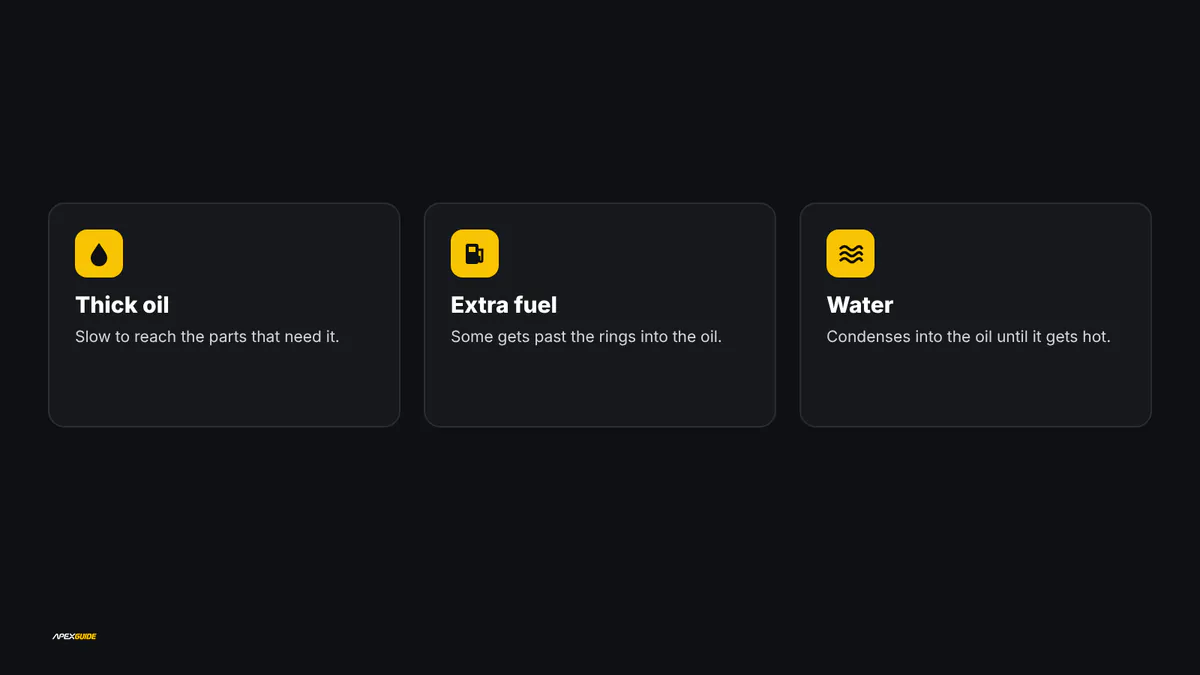
When an engine has sat overnight in the cold, most of its oil has drained down into the sump. Cold oil is thicker, so it takes longer to be pumped back up to the bearings, the camshafts and the cylinder walls. Until it gets there, those parts have less protection than they do once the engine is warm.
A cold engine also runs a richer fuel mixture until it warms up. Some of that extra fuel gets past the piston rings and into the oil, and so does water from combustion, which condenses on cold metal. Once the oil gets properly hot, most of it burns or boils off again. If the engine never gets hot, it stays in the oil.
That's why engineers have long said the minutes right after a cold start are when an engine wears most. A University of Alaska science column put it plainly back in 1985: "by far the greatest amount of engine wear takes place before the oil is warmed up."
Myth: you need to idle the car for 10 minutes first
This one made sense on old carburettor cars, which ran badly until they were warm. Modern fuel-injected engines adjust the mixture for the cold themselves, and modern oils flow much better at low temperatures than older ones did.
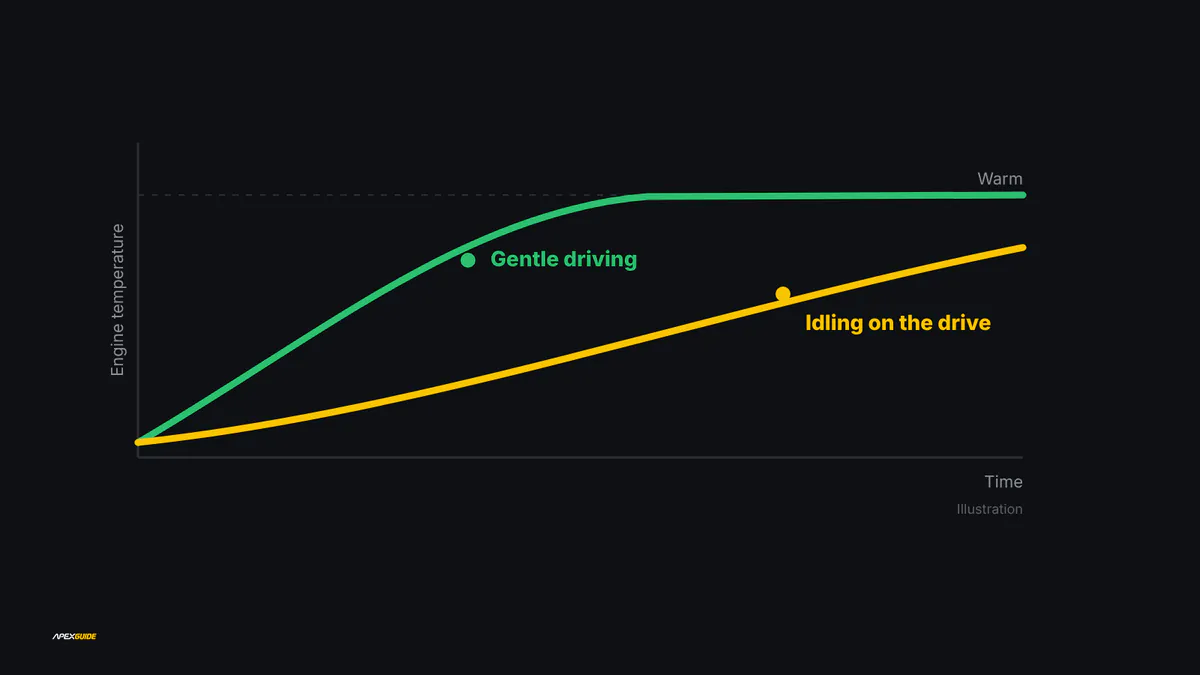
Idling is also a slow way to warm an engine. At idle it isn't working hard, so it makes very little heat. Motor1 and Cars.com both say an engine reaches its normal temperature sooner with gentle driving than sitting still. Most advice now is to start the car, give it 30 seconds to a minute, and then drive off gently.
In the UK, sitting with the engine running can also cost you money. Rule 123 of the Highway Code says you must not leave an engine running unnecessarily while parked on a public road, and councils can give you a fixed penalty if you refuse to switch off when asked.
Myth: revving it warms it up quicker
This is the habit that actually causes harm. Revving a cold engine, or pulling away hard before it's warm, puts the biggest loads through it at the moment the oil is thickest and slowest to reach the parts that need it. Every source we looked at says the same thing: no hard acceleration, high revs or heavy loads for the first few minutes.
Don't forget the gearbox
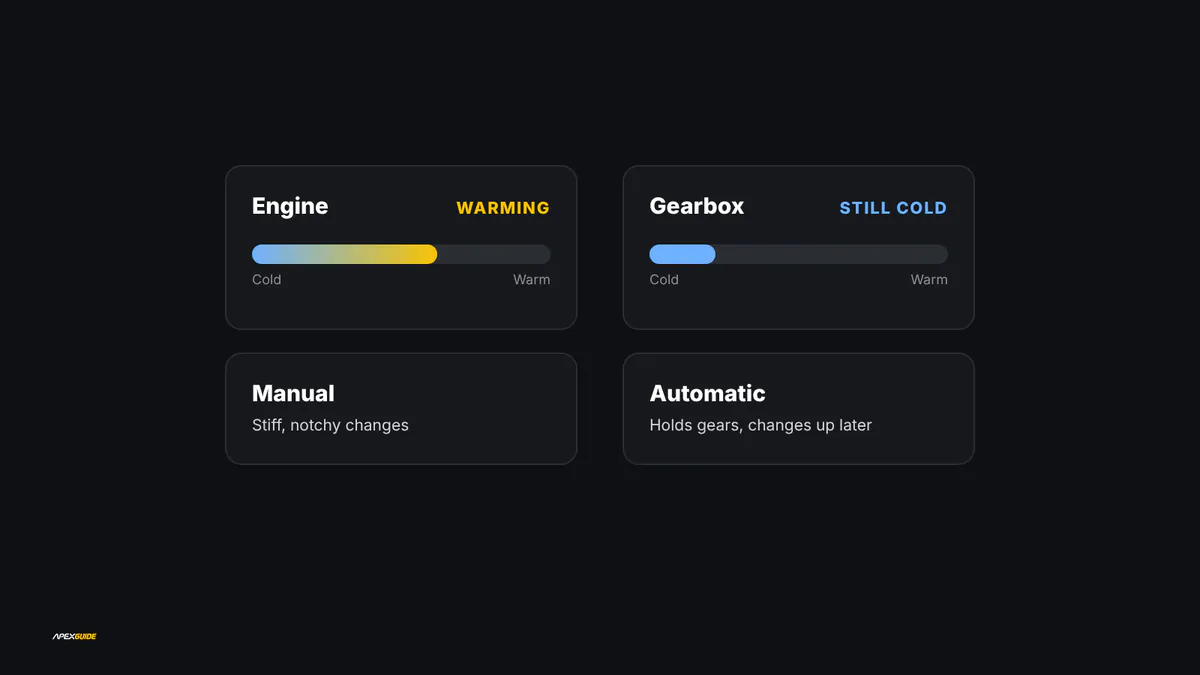
This is the one most people forget. The engine has a temperature gauge, but the gearbox doesn't, and it warms up more slowly because it isn't making its own heat. Its oil is thick when it's cold, just like engine oil.
In a manual, that's why the first few changes on a frosty morning can feel stiff or notchy. Take them slowly and don't force the lever. If it's still hard to get gears once the car is warm, get it looked at, because low gearbox oil is a common cause.
Automatics notice the cold too. Cold transmission fluid is thicker, so many automatic gearboxes hold each gear for longer and change up later until the fluid has warmed. That's normal. In one service bulletin, General Motors says it takes about 10 minutes for the fluid in one of its CVT gearboxes to warm up, even on a mild day. So give the gearbox the same easy first few miles as the engine, and don't use kickdown or launch control until everything is warm.
Does putting the heater on straight away slow things down?
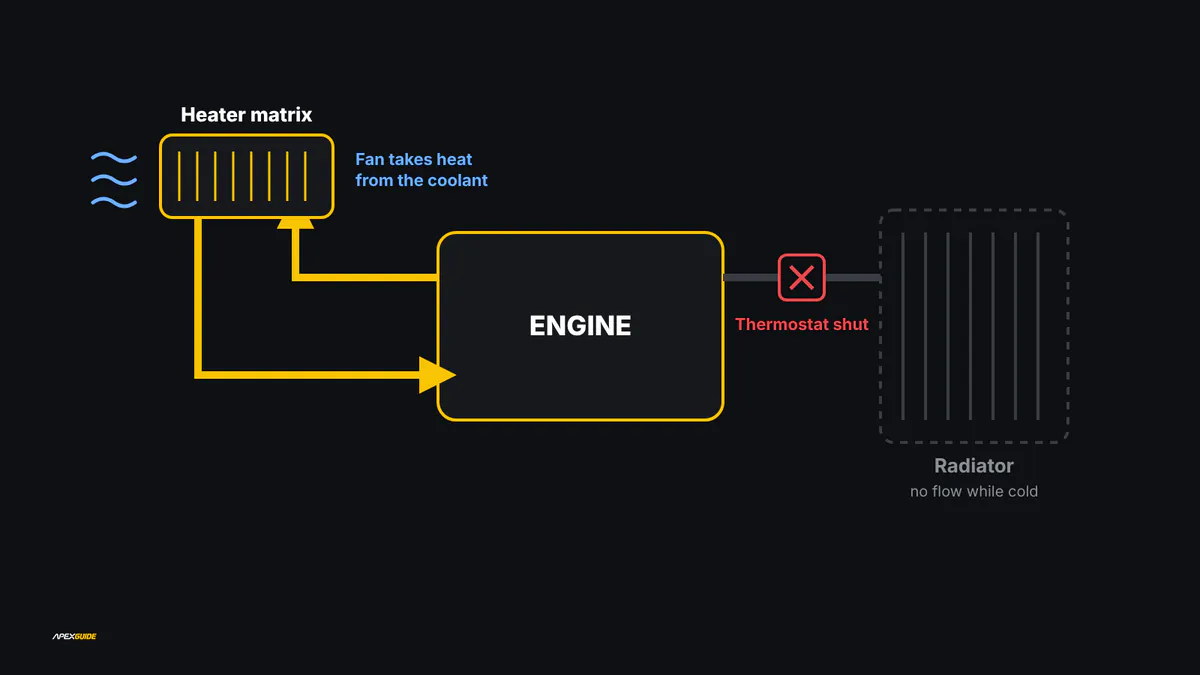
A little, yes. While the engine is cold, the thermostat stays shut and the coolant skips the radiator, but it still flows through the heater. The heater is basically a small radiator inside the dashboard, so with the fan on full it pulls heat out of the coolant that would otherwise be warming the engine. That said, it doesn't hurt the engine. It just takes a bit longer to warm up, especially if you're driving gently.
What matters more is being able to see. Rule 229 of the Highway Code says you must clear all snow and ice from your windows before you drive and make sure they're properly demisted. So clear the glass first, with the air con on to help dry the air. Once you can see, you can turn the fan down until the air coming out is actually warm.
The hidden one: lots of short trips
Popping to the shop, the school run, a two-mile drive to work. In winter the engine may never get properly hot on journeys like these, so the fuel and water that collect in the oil during a cold start don't get the chance to burn or boil off.
Engineers have measured this. A 1991 SAE study, which filmed engine oil through a transparent sump, found that cold-start, short-trip driving builds up fuel, water and other contaminants in the oil, and that "in this type of service the engine oil degrades at a rapid rate." Once the oil got properly warm, the sludge and contaminants cleared. A 2022 SAE study from Tsinghua and Birmingham universities found that frequent stop-starts increased the amount of water getting into the oil, to the point of turning it creamy.
If most of your winter driving is short hops, take the car on a longer run now and then, and don't stretch your oil changes. Some handbooks list a shorter service interval for this kind of use, so it's worth checking yours.
Why it matters more on some engines
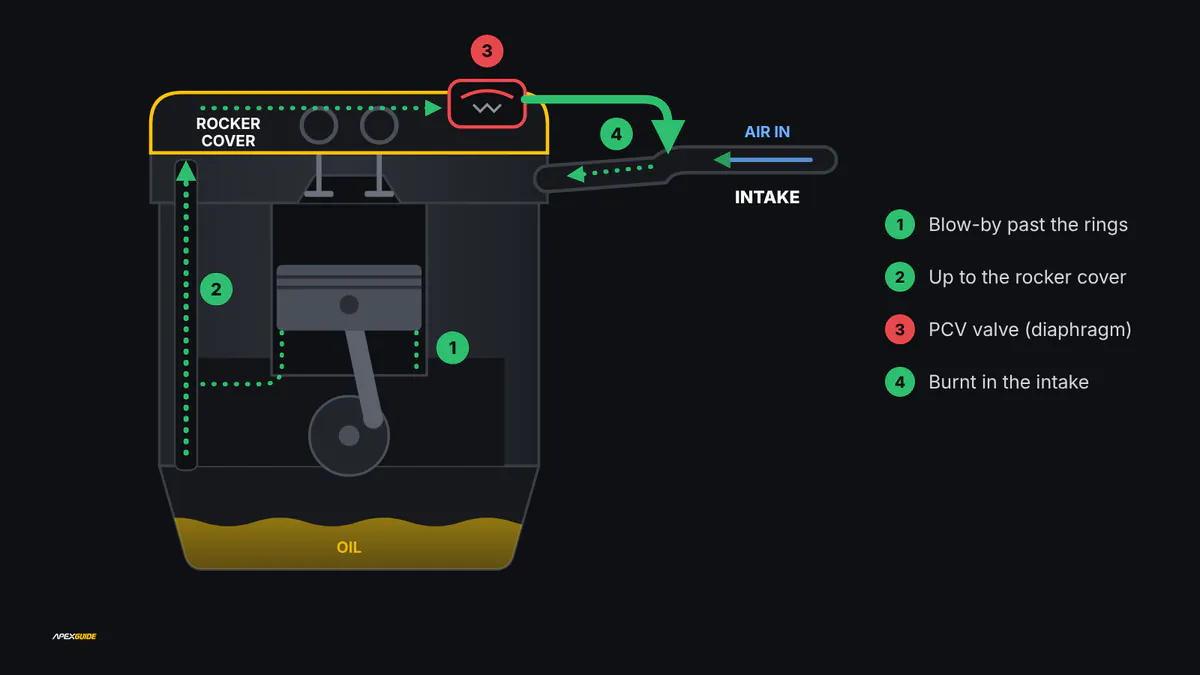
Engines like BMW's 3.0 litre B58, found in cars such as the 340i, M140i, M240i and Toyota GR Supra, show why this matters. The crankcase ventilation system takes the fumes, fuel vapour and moisture that get past the piston rings and feeds them back into the engine to be burnt. On the B58 the valve that controls it sits in the rocker cover, and it uses a rubber diaphragm.
That diaphragm is a known weak point. In a 2023 bulletin, BMW in the US said it "can rupture/split" over time and extended the warranty on the part to 15 years or 150,000 miles. The signs BMW lists include smoke after a cold start, a whistle at idle, misfires and the engine going into limp mode.
BMW puts the failures down to age, heat and wear, and doesn't say idling causes them. But the system's whole job is dealing with the moisture and fuel vapour a cold engine produces. Long cold idles and lots of short trips give it more of that to deal with. If a B58 starts whistling at idle or puffing smoke on a cold start, get the valve checked.
What to do on a cold morning
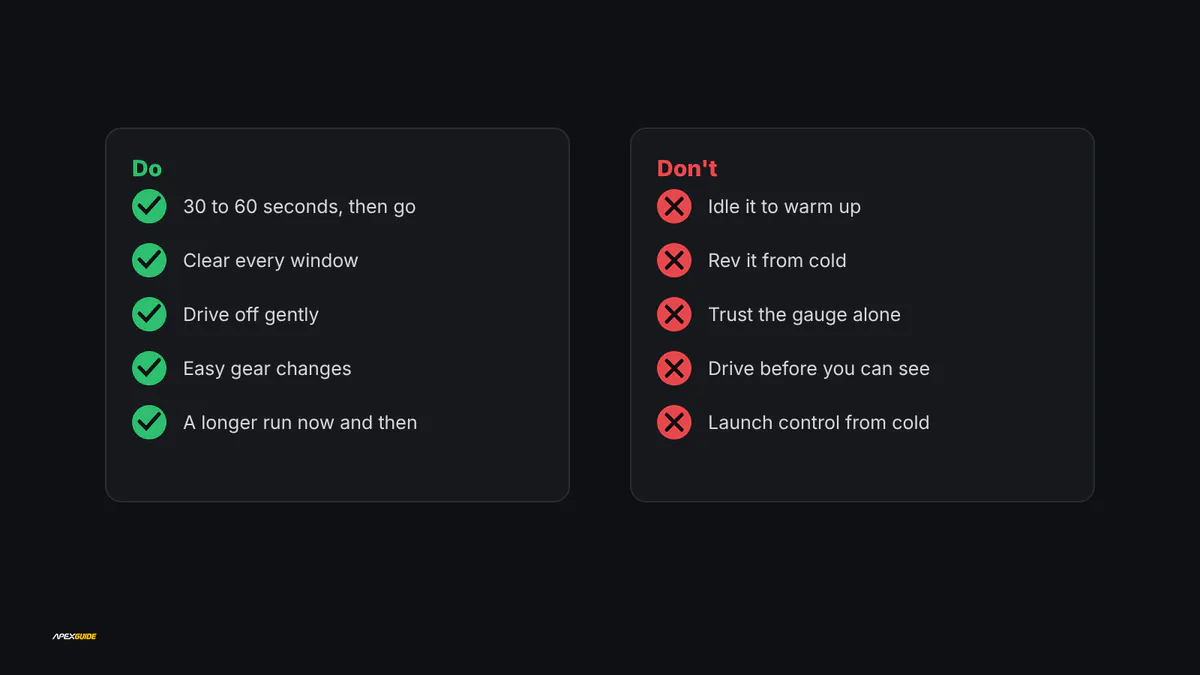
- Start the car and give it 30 seconds to a minute while you put your belt on and sort your music.
- Clear every window properly before you move. Use the heater and air con on the screen, then turn the fan down once you can see.
- Drive off gently. Keep the revs low and don't floor it for the first few miles.
- Change gear gently for the first few miles. The gearbox takes longer to warm up than the engine.
- Remember the temperature gauge on most cars shows the coolant, not the oil. The oil usually takes longer to warm up, so give it a few more minutes before you use all the revs.
- If you mostly do short trips, give the car a longer run now and then and keep up with oil changes.
- Don't leave it idling on the road or the drive to warm up.
The same goes for track days
Winter track days often start on a frosty paddock with a cold car, and the same rules apply, just with more at stake. Your first laps are a warm-up for the engine, gearbox and brakes as well as the tyres, so build up gradually rather than going flat out from the pit exit. A cold car on a cold circuit is also when people get caught out, so take it steady until everything is up to temperature.
If you're thinking about a track day this winter, our winter track day guide covers how to get your car and yourself ready, and our list of UK track days in November and December has the dates and prices.
Frequently Asked Questions
How long should I warm up my car in winter?
For most modern cars, 30 seconds to a minute is enough before you drive off. After that, drive gently for the first few miles rather than sitting at idle.
Is it bad to rev a cold engine?
Yes. The oil is thicker when it's cold and takes time to reach every part of the engine, so high revs and hard acceleration in the first few minutes add wear.
Does the gearbox need to warm up too?
Yes. Gearbox oil is thick when it's cold, so manual changes can feel stiff and automatics often change up later. Drive gently for the first few miles and it warms up with the car.
Does using the heater slow down engine warm-up?
Slightly, because the heater takes heat from the coolant. It doesn't damage the engine, and you must clear and demist your windows before you drive anyway.
Is it illegal to leave your car running to warm it up?
Under Highway Code rule 123 you must not leave the engine running unnecessarily while parked on a public road. Councils can fine you if you refuse to switch off when asked.
Are short journeys bad for your engine in winter?
They can be. If the engine never gets hot, fuel and water from cold starts build up in the oil. A longer run now and then and regular oil changes help.