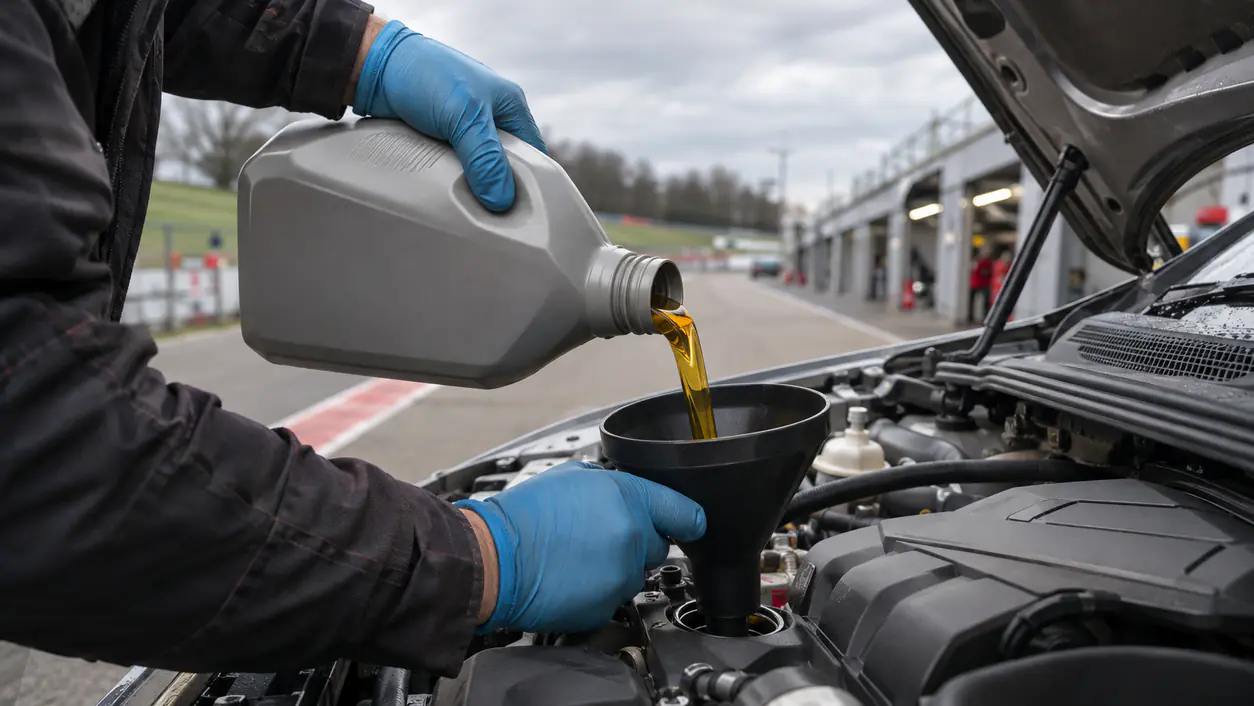
Ask on a car forum whether to change your oil before or after a track day and you'll get both answers, and plenty of people do both. For a road car that does a few track days a year, keeping the level right on the day matters more than when you change it.
The short answer
- If your oil is nearly due a change, do it before the track day, a few days early.
- If it was changed recently, leave it. Check the level and fill it to the max mark.
- After the day, check the level and look for leaks. If you do track days regularly, change your oil more often than the normal road interval rather than after every single event.
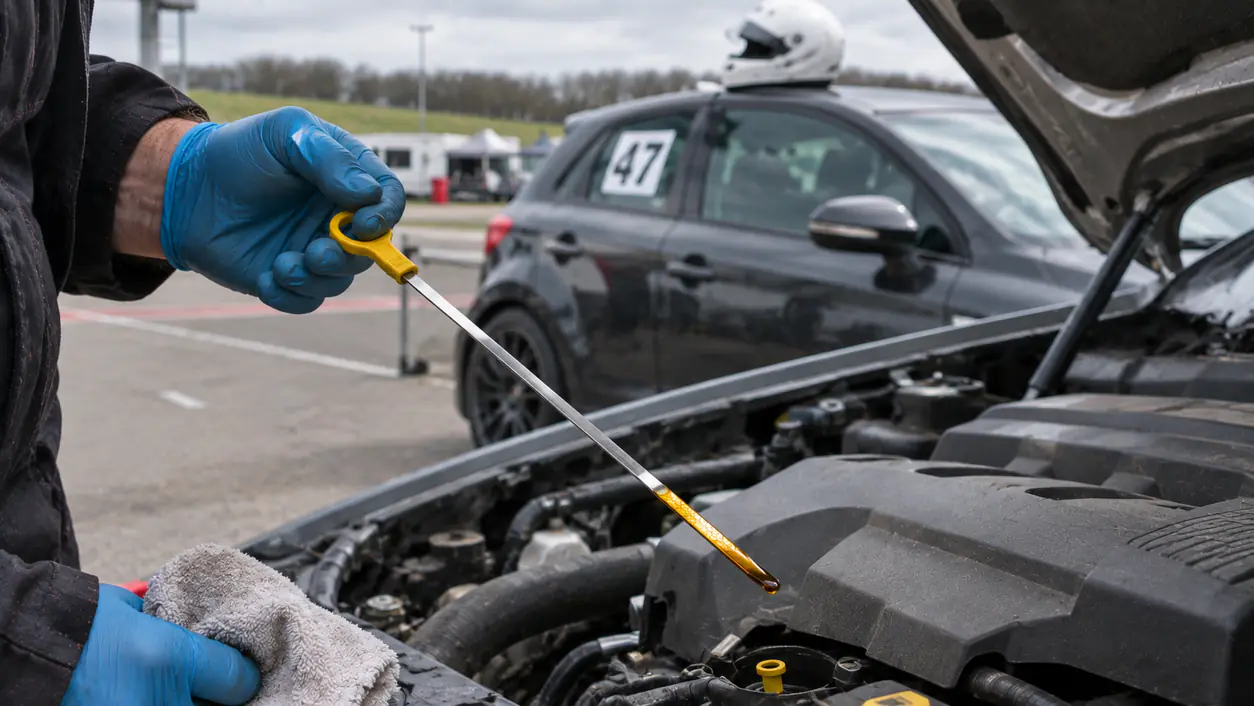
Why track days are hard on oil
A 20 minute session at high revs makes the oil far hotter than a drive on the road ever does. The Drive explains that heat and blow-by wear out the oil's protecting properties faster, which is why racers change it much more often than road drivers.
Long, fast corners can also push the oil to one side of the sump, away from the pickup. That's why the level matters so much on the day. Some cars burn a bit of oil on track too, so the level you start with isn't always the level you finish with.
Use the right grade
Track drivers often move from a thin 0W-20 to a 5W-30 or 5W-40, especially on tuned cars making more power. That's because oil thins as it gets hotter, and on track it gets much hotter than on the road. A thicker grade keeps a stronger film between the moving parts when it's hot. The figure that measures this is called HTHS (high temperature, high shear). Liqui Moly's figures show a C3 or A3/B4 oil must reach at least 3.5 mPa·s, while a 0W-20 can be as low as 2.6.
Stay within the grades and specs your handbook approves. Many engines list more than one, so pick the thickest approved option rather than a race oil. Some engines, such as the Ford 1.0 EcoBoost and the 1.2 PureTech, need the exact listed spec. Our guide to the best engine oil for track days explains how to choose.
Before the track day
- Check the level on flat ground with the engine cold, and fill it to the max mark.
- If the oil is close to its service interval, change it now. Do it a few days early and drive the car normally first, so you can check for leaks and recheck the level before you set off.
- Pack a litre of the same oil to top up during the day.
On the day
- Check the level between sessions once the car has stood on level ground for a few minutes, and top it up to the max mark.
- Don't overfill it. Too much oil can froth up and cause its own problems.
- Take it easy on the first lap while the oil warms up, and do a slow lap before you come in so everything cools down.
- If the oil warning light comes on or flickers in a corner, come in.
After the track day
- Check the level again, as you may have used some.
- Look under the car for fresh leaks.
- If your handbook has a severe use or motorsport service schedule, follow it.
- Otherwise, if you do a few track days a year, shorten your oil change interval. Racers change it every event or two. A road car doing a few track days a year doesn't need that, but changing it more often than the road interval is a cheap way to look after the engine.
How to change your oil at home
If it's time for a change, you can do it yourself in about an hour. All you pay for is the oil, a filter and a washer.
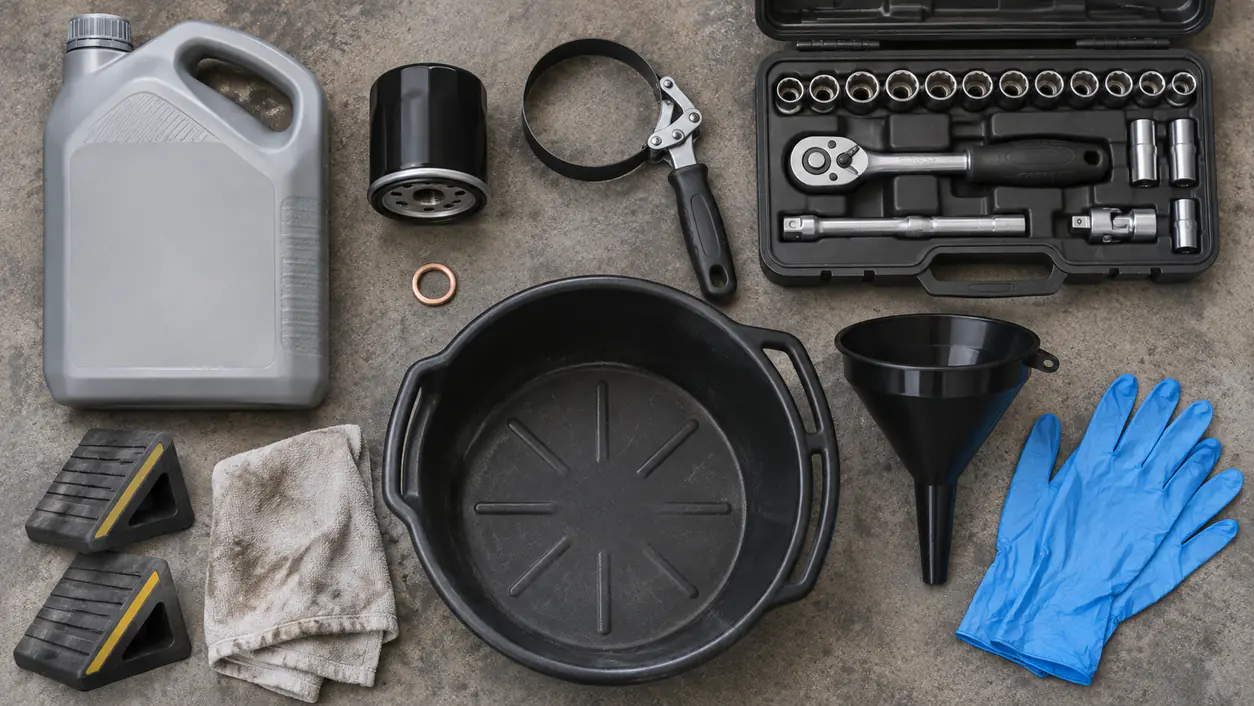
You'll need the right oil (most cars take about 4.5 litres), a new filter and sump plug washer, a socket set, an oil filter wrench, a drain pan, a funnel, gloves, and axle stands or ramps with wheel chocks. Your handbook lists the oil grade, how much your engine holds and how tight the sump plug should be.
1. Warm it up and lift the car
Run the engine for about five minutes, then let it stand for five to ten so the oil isn't too hot to handle. Chock the wheels and lift the car onto axle stands or ramps. Never work under a car held up only by a jack. Open the bonnet and loosen the oil filler cap.
2. Drain the old oil
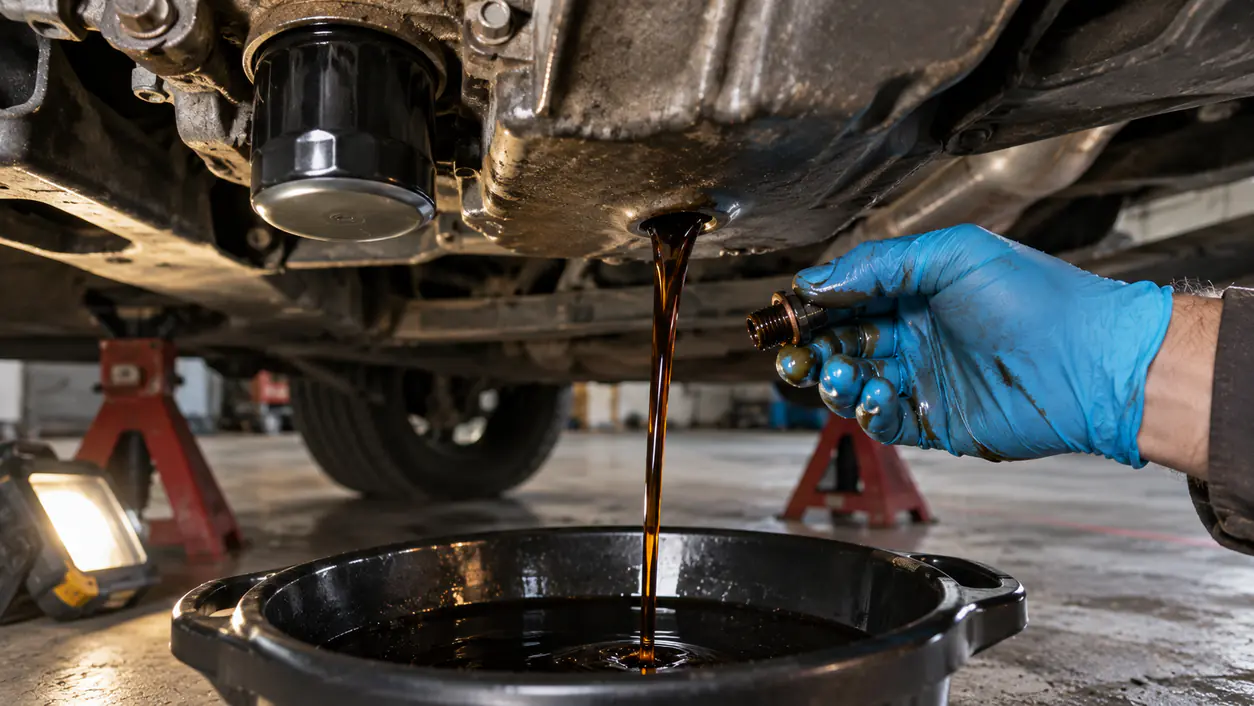
Find the sump plug at the lowest point of the engine. Don't confuse it with the gearbox plug, which is often close by. Put the drain pan underneath, undo the plug and let the oil drain until it's down to a drip.
3. Swap the filter
Undo the old filter with the filter wrench, keeping the pan underneath. Check the old rubber seal hasn't stuck to the engine. Rub a little new oil on the new filter's seal and screw it on by hand. Don't overtighten it.
4. Refit the plug and refill
Fit a new washer to the sump plug and tighten it to the figure in your handbook. Lower the car so it's level, then pour in a little less oil than the handbook says.
5. Check the level
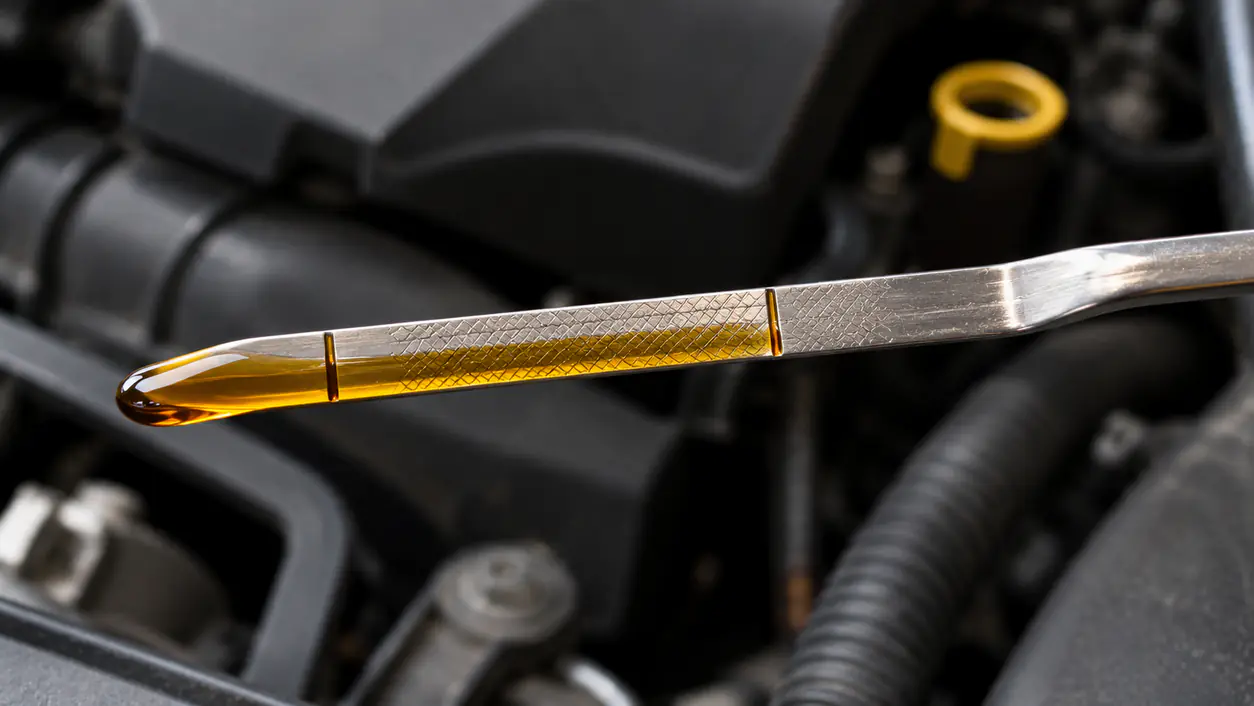
Start the engine. The oil warning light should go out within a few seconds. If it doesn't, switch off straight away. Let it run for a minute, switch off and check for drips. After five to ten minutes, check the dipstick and top up a little at a time until it's near the max mark.
Take the old oil to your local recycling centre in a sealed container, such as the empty bottle from the new oil. It's illegal to pour it down the drain.
More track day prep
For the rest of your preparation, see our car preparation guide, our winter track day guide and why you shouldn't rush a cold engine. You can log each oil change in the garage section of the ApexGuide app, which is on our list of free apps for track day preparation.
Frequently Asked Questions
Should I change my oil before my first track day?
Only if it's due soon. Fresh oil won't make you faster. What matters is that the level is right and there are no leaks.
How many track days before an oil change?
There's no fixed number. Follow any severe use schedule in your handbook. If there isn't one, change it more often than the normal road interval. Racers change it every event or two, but for a road car doing a handful of track days a year, that's usually more than you need.
Should you change your oil after every track day?
Not usually. Check the level and look for leaks after each one, and shorten your normal interval if you do several a year. Race teams change it after every event, but most track day drivers don't need to.
Do I need special oil for a track day?
Usually not. A good fully synthetic oil that meets your car's specification is the starting point. Our track day oil guide and what oil does my car need explain what to look for.
Can I change my own oil?
Yes, as long as you can lift the car safely and find the right plug. AXA puts the average garage oil change at around £114, so doing it yourself usually saves money. Our guide to buying engine oil for less helps too.
What does the red oil warning light mean?
It usually means low oil pressure. Stop as soon as it's safe, switch off and check the level. On track, come straight into the pits. If the light stays on after topping up, don't drive the car.